TMS Therapy Treatment FOR DEPRESSION
When your depression medication isn't working as well as you hoped.
Our Helpful Links
Schedule Your Consultation Appointment
If you are dealing with depression or a neurological disorder, remember that you are not alone. It's crucial to understand that you are not isolated in this experience.
TMS Therapy Enhances Mental Well-Being
- ADHD
- Anger Management
- Anxiety
- Asperger's Syndrome
- Bipolar Disorder
- Borderline Personality (BPD
- Chronic Illness
- Chronic Impulsivity
- Depression & Suicidal Ideation
- Developmental Disorders
- Dual Diagnosis
- Emotional Disturbance
- Geriatric and Senior Mental Health
- Impulse Control Disorders
- LGBTQ+ Mental Health
- Medication Management
- Oppositional Defiance (ODD)
- Personality Disorders
- Relationship Issues
- Child & Teen School Issues
- Self Esteem
- Sleep or Insomnia
- Substance Use
- Thinking Disorders
- Trauma and PTSD
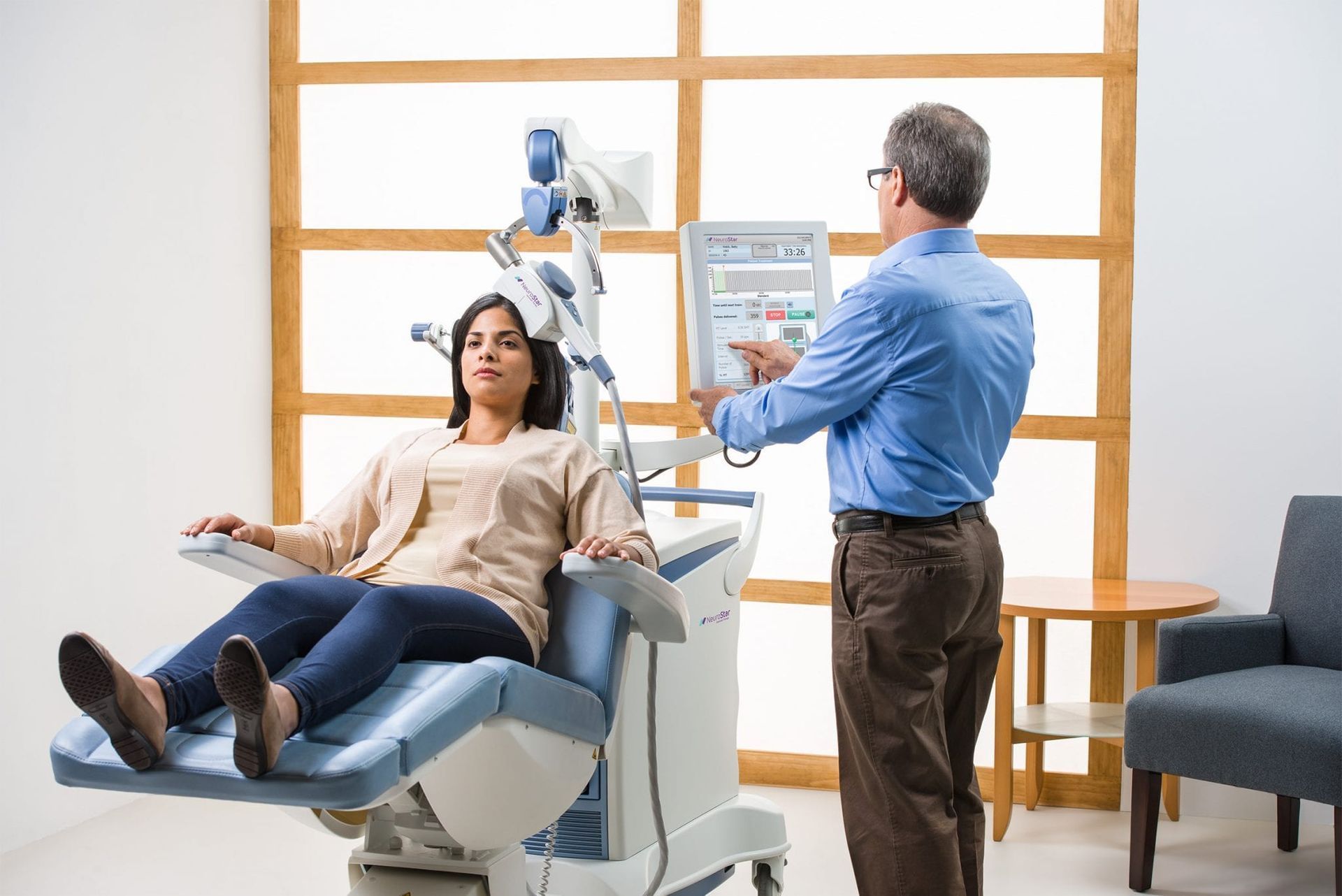
What is TMS Therapy?
At Peace of Mind Psychiatry, every element of our care—from intake to follow-up—is designed to reflect that mission. We believe in accessibility (flexible hours, multiple treatment options), evidence-based practices (TMS, esketamine, medication management), compassionate expertise (deep experience + humane connection) and lasting recovery (we aim not just for symptom relief but for improved quality of life and resilience).

Is TMS Therapy the Right Choice for You?
If you're contemplating TMS therapy, it's crucial to speak with a qualified psychiatrist beforehand. An experienced professional can evaluate if TMS is the appropriate option for you. Our dedicated team is committed to providing personalized care and support throughout the entire process.
We will collaborate with you to develop a customized treatment plan that meets your specific needs.
- Alleviate negative mental health symptoms
- Discover noninvasive mental health solutions
- Rest assured knowing TMS is FDA-approved
- Enhance electromagnetic activity and balance mood
- Explore alternatives to traditional treatment approaches
What is TMS Therapy Used to Treat?
Major Depressive Disorder (MDD)
- MDD is the primary use of TMS therapy.
- Particularly effective for treatment-resistant depression, where antidepressants and therapy have not been successful.
- Stimulates the left prefrontal cortex to increase neural activity associated with mood regulation.
Obsessive-Compulsive Disorder (OCD)
- FDA-cleared for adults with moderate to severe OCD.
- Targets brain areas involved in obsessive thoughts and compulsive behaviors.
Anxiety Disorders
- Generalized Anxiety Disorder (GAD)
- Panic Disorder
- Social Anxiety Disorder (SAD)
- Targets the right prefrontal cortex to reduce overactivity in areas associated with fear and worry.
Post-Traumatic Stress Disorder (PTSD)
- Can help reduce intrusive thoughts, hypervigilance, and anxiety.
- Targets the dorsolateral prefrontal cortex (DLPFC) and other areas involved in emotional regulation.
Chronic Pain and Fibromyalgia
- Reduces pain perception by stimulating the motor cortex and areas involved in pain processing.
- Can be combined with physical therapy for better outcomes.

Lorem ipsum dolor sit consectetur adipiscing
Fusce porttitor facilisis urna, non egestas ligula dapibus et. Integer suscipit ullamcorper quam, sed varius neque. Vivamus vel risus suscipit, scelerisque ex nec, dignissim nisl. Ut placerat arcu quis mauris mattis pellentesque sed a diam. Integer mattis mi erat, non convallis diam pharetra ac. Nulla facilisi. Nullam vestibulum ligula non odio ultricies gravida. Nunc malesuada metus tempus, dignissim tortor in, suscipit ipsum. Maecenas vitae commodo lectus.
Vestibulum ante ipsum primis in faucibus orci luctus et ultrices posuere cubilia curae; Etiam eu consectetur augue. Proin congue est nec nisl dapibus, ac tristique tellus vestibulum. Etiam tortor odio, dictum id nibh eu, tempus varius lectus.
ANONYMOUS DEPRESSION, ANXIETY & ADHD Children Screening QUIZ
By completing our free online assessments, you'll understand the severity of your depression or anxiety symptoms and how they change over time. The PHQ-9, GAD-7, and NICHQ Vanderbilt Assessment Scale are anonymous, collecting no personal information. To track your progress, consider bookmarking these quizzes for easy access.
Why Choose Us for TMS Therapy?
Peace of Mind offers:
- Non-Invasive: No surgery or anesthesia.
- Well-Tolerated: Minimal side effects compared to medications.
- Targeted: Focuses on specific brain regions without affecting the entire brain.
- Effective for Treatment-Resistant Conditions: Especially useful for patients who haven’t responded to medication or therapy.

Got questions?
We've got the answers!
Do you have inquiries regarding our TMS Therapy? We're here to assist you. Explore the frequently asked questions below or reach out to us for further details.
TMS (Transcranial Magnetic Stimulation) is a non-invasive, FDA-cleared treatment that uses magnetic pulses to stimulate areas of the brain responsible for mood regulation. It is safe, well tolerated, and effective for patients whose symptoms have not responded fully to medication or therapy.
TMS is FDA-cleared for Major Depressive Disorder (MDD) and OCD. It is also used off-label for anxiety, PTSD, bipolar depression, and other treatment-resistant mood conditions when clinically appropriate.
TMS is generally comfortable. Some patients experience mild tapping sensations on the scalp or a temporary headache during early sessions. These effects typically fade as treatment continues.
Most sessions last between 15–30 minutes. After each session, patients can return to work, school, or daily activities without downtime.
A typical course of TMS runs 5 days per week for 6–8 weeks. Some patients benefit from taper sessions or occasional booster treatments later on.
Yes. Most major insurance plans cover TMS for treatment-resistant depression when criteria are met. Our team helps with verification and the approval process.
Yes. TMS is often combined with medications and psychotherapy. Your provider will coordinate your treatment plan to ensure safety and optimal outcomes.
TMS is not recommended for individuals with metal implants in or near the head (except dental fillings), a history of seizures, or certain neurological conditions. Your provider will review your medical history to determine eligibility.
Mauris auctor risus et nisl condimentum ullamcorper?
Nam velit nisl, euismod eget fringilla quis, vestibulum nec lorem. Suspendisse efficitur interdum mauris eget iaculis. Curabitur id tellus a sapien vehicula lobortis. Aenean tincidunt magna vel lorem aliquet, sed consequat enim ultricies. Nulla cursus ex velit, pharetra tempus nibh mollis nec. Nunc eget urna et tortor scelerisque rutrum. In elementum semper vulputate. Proin ac nibh semper, tincidunt augue sed, ornare ligula.
Nullam in pellentesque leo, ut efficitur erat?
Nam velit nisl, euismod eget fringilla quis, vestibulum nec lorem. Suspendisse efficitur interdum mauris eget iaculis. Curabitur id tellus a sapien vehicula lobortis. Aenean tincidunt magna vel lorem aliquet, sed consequat enim ultricies. Nulla cursus ex velit, pharetra tempus nibh mollis nec. Nunc eget urna et tortor scelerisque rutrum. In elementum semper vulputate. Proin ac nibh semper, tincidunt augue sed, ornare ligula.
Proin turpis eros, rhoncus ut eros semper, luctus viverra justo?
Nam velit nisl, euismod eget fringilla quis, vestibulum nec lorem. Suspendisse efficitur interdum mauris eget iaculis. Curabitur id tellus a sapien vehicula lobortis. Aenean tincidunt magna vel lorem aliquet, sed consequat enim ultricies. Nulla cursus ex velit, pharetra tempus nibh mollis nec. Nunc eget urna et tortor scelerisque rutrum. In elementum semper vulputate. Proin ac nibh semper, tincidunt augue sed, ornare ligula.
Maecenas lectus nulla, gravida lacinia sem nec, auctor convallis orci?
Nam velit nisl, euismod eget fringilla quis, vestibulum nec lorem. Suspendisse efficitur interdum mauris eget iaculis. Curabitur id tellus a sapien vehicula lobortis. Aenean tincidunt magna vel lorem aliquet, sed consequat enim ultricies. Nulla cursus ex velit, pharetra tempus nibh mollis nec. Nunc eget urna et tortor scelerisque rutrum. In elementum semper vulputate. Proin ac nibh semper, tincidunt augue sed, ornare ligula.